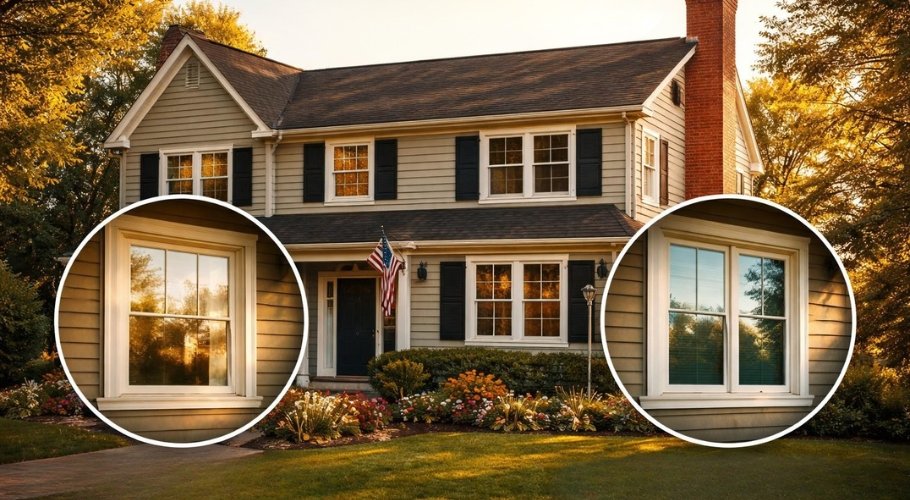
An Ewing Township NJ Film Expert Guide That Covers Every Window in Your Home
Most window film conversations start and end with one room. The living room that bakes in the afternoon. The home office where the glare is unbearable. The bedroom that never cools down. And because the conversation starts there, the installation often ends there too — leaving the rest of the home’s glass unaddressed, underperforming, and quietly costing more than it should.
The reality is that every window in an Ewing Township home has a different performance profile. North-facing glass behaves differently from south-facing glass. A ground-floor bedroom window has different security considerations than a second-floor landing window. A bathroom window has different privacy requirements than a dining room window. A single-pane original window from 1972 has different film compatibility constraints than a double-pane Low-E unit installed in 2008.
A complete window film strategy accounts for all of it — not by installing the same film everywhere, but by matching the right specification to each window’s actual conditions. This is what a genuine whole-home film assessment looks like for Ewing Township properties.
Start With What You Have: Understanding Ewing’s Housing Stock
Before any film specification makes sense, you need to know what you’re working with. Ewing Township’s residential stock is genuinely diverse — a reflection of the township’s development across multiple decades.
Older Ewing homes — particularly pre-1985 construction in the Ewingville area, along Pennington Road, and through the West Trenton neighborhoods — commonly have original or period-replacement single-pane windows. These are the most thermally vulnerable glass profile in the township. They offer minimal insulation in either direction — heat pours in during summer and escapes readily during winter. They are also, from a film compatibility standpoint, the most forgiving substrate. Virtually any film type — solar control, security, Low-E insulating, privacy — installs and performs reliably on single-pane glass.
Mid-generation homes built between approximately 1985 and 2000 typically have double-pane windows without Low-E coatings — improved thermal performance over single-pane but without the additional solar management layer that later construction includes. These windows require film with moderate solar absorption characteristics to avoid thermal stress issues in the sealed unit.
Newer Ewing construction — post-2000 development and recent renovations — almost universally features double-pane Low-E glass. These windows already have some solar management built in, which affects which film specifications add genuine additional value versus which ones create compatibility risk. The Low-E coating is invisible to the naked eye but detectable with a professional assessment tool — and any installer who does not test for it before recommending a solar control film for a newer Ewing home has skipped a necessary step.
South-Facing Windows: The Highest Solar Priority
South-facing glass in an Ewing Township home receives direct sun for the longest portion of the day — from mid-morning through late afternoon from spring through autumn, and at a lower, more penetrating angle during winter months. This orientation carries the highest cumulative solar load of any window position and deserves the highest-specification solar control film in the home.
The metric that matters most here is Total Solar Energy Rejected, or TSER. For primary south-facing rooms — great rooms, living rooms, open-plan kitchen and dining areas — a TSER of 60% or above is the threshold that delivers genuinely noticeable thermal improvement in Mercer County’s summer climate. Below that, the difference is present but modest. Above 65%, the transformation is significant — rooms that previously became uncomfortable by early afternoon remain consistently usable throughout the day.
Nano-ceramic films are the specification of choice for south-facing glass in Ewing’s newer double-pane homes. They achieve TSER ratings of 65% to 80% without the metallic reflectivity that gives windows a mirrored exterior appearance, without signal interference that affects smart home systems and wireless devices, and with broad compatibility across double-pane and Low-E configurations when verified correctly. For Ewing’s older single-pane south-facing windows, the same nano-ceramic specification applies — with the added benefit that single-pane compatibility concerns are minimal.
UV blocking on south-facing glass is particularly important for Ewing homes where flooring, furniture, or artwork is positioned near these windows. Premium films block 99% or more of UV radiation — stopping the slow, cumulative fading that UV exposure causes to floors, upholstery, and surfaces over months and years.
West-Facing Windows: The Afternoon Heat Problem
West-facing glass in an Ewing Township home takes the full force of afternoon sun from approximately 1 PM onward — the hottest, highest-intensity solar period of the day in Mercer County’s summer climate. The rooms behind west-facing windows are typically the household’s most problematic spaces from late spring through early autumn: uncomfortably warm, high-glare, and avoided by family members during prime afternoon hours.
The film specification for west-facing glass mirrors south-facing recommendations in terms of TSER priority. A TSER of 60% or above addresses the afternoon thermal load that makes these rooms difficult to use. The glare reduction dimension is arguably more acute on west-facing glass than on south-facing glass because the low sun angle in late afternoon creates particularly harsh, penetrating light conditions that standard solar control addresses through a combination of infrared blocking and visible light management.
Premium spectrally selective films — a subset of nano-ceramic technology engineered specifically to maintain high visible light transmission while blocking the infrared spectrum — are particularly appropriate for west-facing glass in Ewing homes where occupants want to retain the visual connection to the outdoors and the quality of afternoon light without the thermal discomfort and glare. These films achieve their performance through wavelength-selective blocking rather than overall light reduction, meaning the room remains bright and naturally lit while the heat component is dramatically reduced.
Glare reduction on west-facing glass is also a productivity issue for Ewing homeowners with offices, screens, or workspaces positioned near these windows. High-performance films reduce visible glare by 65% to 80%, which converts previously difficult workspaces into consistently functional ones without the need for blinds or repositioning.
East-Facing Windows: Morning Sun and the Overlooked Orientation
East-facing glass receives direct morning sun — typically from sunrise through mid-morning — and transitions to shaded conditions for the remainder of the day. This makes east-facing windows the most commonly overlooked orientation in residential film consultations, because the solar load is lower than south- and west-facing glass and the morning hours feel less acute than afternoon heat.
But east-facing windows in Ewing homes deserve attention for two specific reasons.
First, morning glare. Low-angle morning sun entering east-facing windows creates the same high-contrast glare conditions that afternoon sun creates on west-facing glass. For Ewing homeowners who work from home, have breakfast areas or kitchen workspaces near east-facing glass, or simply find early morning light uncomfortably harsh, glare-control film on east-facing windows addresses a real daily friction that is easy to dismiss until it’s solved.
Second, UV accumulation. Even though east-facing windows receive less total solar energy than south- or west-facing glass, the UV exposure from morning sun accumulates over years and affects flooring, furniture, and surfaces near east-facing glass just as it does near any other orientation. The same UV protection that benefits south-facing floors benefits east-facing ones — just more gradually.
For east-facing glass in Ewing homes, a lighter-specification solar control film — TSER in the 40% to 55% range — combined with full UV blocking is typically appropriate. This addresses morning glare and UV without over-specifying for a solar load that is genuinely lower than the home’s primary south and west exposures.
North-Facing Windows: The Winter Priority
North-facing glass in an Ewing Township home receives no direct sun at any point during the year. It is a pure thermal exchange surface — contributing to heat loss in winter without any compensating solar gain in summer. For most north-facing windows, solar control film adds no meaningful value.
What north-facing glass does need — particularly in Ewing’s older single-pane housing stock — is insulating performance improvement for winter. Mercer County’s winter climate is genuine: January average lows reach the mid-20s°F, with extended periods of sub-freezing overnight temperatures from December through February. Single-pane glass has an R-value of approximately 0.9 — almost no insulating capacity. Heat generated inside an Ewing home escapes readily through single-pane north-facing glass on cold nights and overcast winter days.
Low-emissivity insulating film addresses this directly. It reflects interior infrared heat back into the room rather than allowing it to pass through the glass, meaningfully improving the thermal performance of single-pane north-facing windows at a fraction of the cost of window replacement. For Ewing homeowners with older housing stock who are not yet replacing windows, Low-E film on north-facing glass captures winter energy savings that solar control film cannot provide.
For newer double-pane Ewing homes, north-facing glass performance is already substantially improved by the sealed air gap, and film adds less additional winter value. In these cases, north-facing window film is a lower priority than south and west solar control.
Ground-Floor Windows: The Security Layer
Every ground-floor window in an Ewing Township home — regardless of orientation — has a security dimension that upper-floor windows do not. Ground-level glass is directly accessible from outside without equipment, and in Ewing’s context adjacent to Trenton’s property crime environment, this accessibility is a real and specific consideration.
Security window film at 8 mil thickness — the residential standard for primary entry-point glass — changes how ground-floor windows respond to forced impact. Rather than shattering and clearing the frame in under ten seconds, the glass fractures but remains in position, held by the film’s high-tensile polyester structure. The entry attempt that would have completed silently in ten seconds now requires sustained, noisy, repeated effort — typically sixty seconds or more — before the film’s holding strength is overcome.
For Ewing ground-floor windows where solar control is also a priority, combination security-plus-solar film specifications exist that address both requirements in a single product. For ground-floor windows where solar load is lower — north-facing ground-floor glass, for example — security film alone without significant solar control properties is the appropriate specification.
Ground-floor windows adjacent to door hardware — sidelights beside entry doors, windows within arm’s reach of a door lock — are the highest-priority security film application in any Ewing home. These are the points where a glass breach translates immediately into complete interior access, and they warrant the most complete security film treatment available.
Bathrooms and Privacy Glass: Where Frosted Film Belongs
Bathroom windows in Ewing Township homes — typically frosted glass from original construction or clear glass covered with external blinds — are the most natural application for privacy window film. Frosted film applied to bathroom glass provides complete visual privacy from outside while allowing natural light to diffuse through the glass, eliminating the need for blinds or curtains that block light to maintain privacy.
The specific privacy film type matters. True frosted film creates consistent diffusion regardless of light conditions — it provides privacy in daylight and after dark, unlike reflective films that provide daytime-only privacy through a brightness differential that reverses after sunset. For bathroom applications in Ewing homes, a genuine frosted or patterned decorative film is the appropriate specification.
Partial frosted application — covering the lower portion of a bathroom window to eye level while leaving the upper portion clear for light transmission — is a practical approach that Ewing homeowners with windows positioned above the sightline from the street may find unnecessary, but those with windows directly visible from neighboring properties or walkways will find genuinely useful.
Upper-Floor Windows: The Lower-Priority Zone With Still-Relevant Needs
Upper-floor windows in Ewing Township homes are less thermally dominant than ground-floor glass — heat rises, and upper floors in summer are often the warmest in the home regardless of window film. But upper-floor south- and west-facing bedroom windows in particular contribute meaningfully to nighttime temperatures that affect sleep quality during Mercer County’s hot summer months.
Solar control film on upper-floor south- and west-facing bedroom windows — at TSER levels of 55% to 65% — addresses the accumulated daytime heat that makes upper bedrooms uncomfortable at night. The film reduces heat gain through the glass during the day, which reduces the thermal load that the room carries into the evening hours. For Ewing families where upstairs bedroom comfort is a persistent summer issue, this is a targeted and cost-effective partial treatment.
UV protection on all upper-floor windows — regardless of orientation — is worth including in any comprehensive Ewing whole-home film strategy, because upper-floor flooring, furniture, and textiles receive the same UV exposure as ground-floor surfaces and degrade on the same timeline without protection.
Building the Complete Specification
A whole-home window film strategy for an Ewing Township property typically looks like this in practice:
South and west-facing primary rooms — nano-ceramic solar control at 65% to 75% TSER with 99% UV blocking. East-facing windows — lighter solar control at 40% to 55% TSER with full UV protection. North-facing single-pane glass — Low-E insulating film for winter performance. All ground-floor windows — 8 mil security film, with combination security-solar specification on south and west ground-floor glass. Bathroom and privacy glass — frosted or decorative film for consistent all-condition privacy. Upper-floor south and west bedrooms — mid-specification solar control at 55% to 65% TSER.
This is not a one-size specification. It is a room-by-room, orientation-by-orientation, glass-type-specific approach that delivers the maximum value from a single installation investment — rather than solving one problem while leaving the rest of the home’s glass performing below its potential.
To develop a complete whole-home film specification that accurately reflects your Ewing Township property’s glass types, orientations, security exposure, and performance priorities, speaking with a local window film specialist who understands Mercer County’s housing stock and climate conditions is the most direct path to getting the full picture right the first time.
Why the Whole-Home Approach Pays
The economics of whole-home window film installation are more favorable than piecemeal installation over time. Mobilization costs — the time, equipment, and setup involved in a professional film installation — are fixed regardless of how many windows are done in a single visit. Installing eight windows at once is substantially more cost-effective per window than installing two now and returning for six more across two future visits.
The performance case is equally clear. An Ewing home where solar control film has been applied to south and west-facing rooms but not to east-facing glass, where ground-floor windows have solar control but not security film, and where north-facing single-pane glass has no Low-E insulating improvement — that home is capturing a fraction of the value a comprehensive installation delivers. Each unaddressed window is a continuing performance gap that a whole-home strategy closes in a single event.
In a township where housing stock ranges from thermally vulnerable single-pane originals to modern double-pane construction, and where the climate demands real year-round performance across four distinct seasons, the whole-home approach is not an upsell. It is simply the complete answer to the complete question.