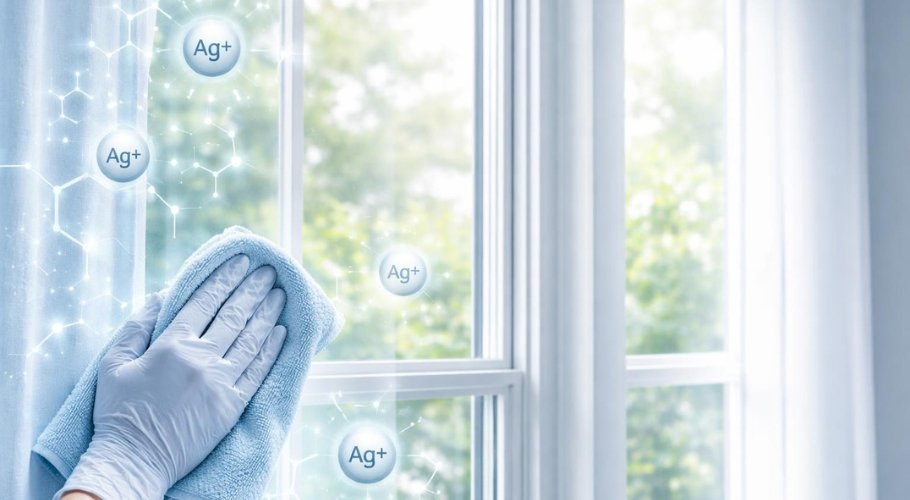
Anti-Microbial Film in South Brunswick NJ Stays Effective Longer With These Simple Care Steps
Anti-microbial window and surface film represents a meaningful investment for South Brunswick homeowners, medical practices, schools, and commercial properties throughout Middlesex County. The film’s active surface technology — engineered to inhibit the growth and transfer of bacteria, mold, and other surface contaminants — works continuously from the moment of installation. But that continuous performance depends on one variable that is almost entirely within the property owner’s control: how the film is cleaned and maintained after installation.
The majority of anti-microbial film failures in South Brunswick are not material failures. They are maintenance failures — cases where the active surface coating was damaged, contaminated, or compromised by cleaning products and techniques that are perfectly appropriate for standard glass or surfaces but destructive to the film’s engineered surface layer. Understanding what the film actually is, how its anti-microbial function works, and what specific care steps preserve that function across South Brunswick’s climate conditions is the difference between a film that performs for its full ten-to-fifteen-year potential and one that loses effectiveness within the first two years.
How Does South Brunswick’s Environment Create Specific Challenges for Anti-Microbial Film Maintenance
South Brunswick Township sits in central Middlesex County, New Jersey — a community that experiences a genuine four-season mid-Atlantic climate with conditions that create specific maintenance challenges for surface films throughout the year.
Summer in South Brunswick brings sustained heat and humidity. July average highs reach 86°F to 88°F with relative humidity levels that regularly exceed 70% during peak afternoon and overnight hours. This combination of heat and humidity creates the exact environmental conditions in which surface bacteria and mold proliferation is most rapid — which is precisely why anti-microbial film is most valuable during South Jersey and central New Jersey summers, and why maintaining its active surface integrity during this period matters most.
The humidity dimension is particularly relevant for maintenance because high-humidity environments accelerate the movement of airborne contaminants and cleaning product residues across film surfaces. Cleaning product residues that are left on anti-microbial film in a humid South Brunswick environment do not simply evaporate — they interact with the film’s surface coating continuously until the next cleaning, potentially degrading the active layer that provides the film’s microbial inhibition function over time.
Winter brings freeze-thaw cycling that stresses film adhesion at edges and frames — the points where moisture intrusion is most likely to begin if edge sealing is compromised by inappropriate cleaning techniques. Spring and autumn bring pollen, particulate deposits, and variable humidity that require more frequent cleaning cycles on surfaces in South Brunswick homes and commercial properties, creating more opportunities for maintenance errors to accumulate.
What Technology Inside Anti-Microbial Film Explains Why Specific Cleaning Methods Matter
Understanding why certain cleaning products and techniques damage anti-microbial film requires understanding how the film’s active surface layer actually functions.
Anti-microbial window and surface films use silver ion technology embedded in or applied to the film’s outermost surface layer. Silver ions — positively charged particles released from silver compounds incorporated into the film’s coating — disrupt the cellular membranes and metabolic processes of bacteria and other microorganisms that contact the film surface. This disruption prevents surface colonization, inhibits biofilm formation, and reduces the transfer of surface bacteria to hands and surfaces that contact the film.
The silver ion surface layer is effective and durable under normal contact conditions. What it is not resistant to is chemical attack from incompatible cleaning agents. Ammonia — the active ingredient in most standard glass cleaning products including the blue spray cleaners found in virtually every South Brunswick household — chemically reacts with silver compounds to form silver-ammonia complexes that reduce the bioavailability of active silver ions on the film surface. Repeated exposure to ammonia-based cleaners progressively depletes the active silver ion concentration in the surface layer, reducing microbial inhibition effectiveness over time in a way that is not visible to the eye but is measurable in the film’s antimicrobial performance.
Bleach and oxidizing disinfectants create a parallel problem — while effective disinfectants on many surfaces, strong oxidizers can damage the polyester laminate base layer of the film and the adhesive system beneath it, potentially causing delamination, cloudiness, and adhesion failure even if the anti-microbial surface layer itself is not immediately compromised.
Abrasive materials — scouring pads, steel wool, rough cloths, and hard plastic scrapers — physically remove the surface coating that carries the silver ion layer, irreversibly eliminating the anti-microbial function from any area where abrasive contact has occurred.
Which Cleaning Products and Tools Actually Preserve Anti-Microbial Film Performance in South Brunswick
The practical cleaning standard that preserves anti-microbial film performance in South Brunswick homes and commercial properties is more accessible than most property owners expect — it simply requires replacing one category of product with another.
The appropriate cleaning solution is mild dish soap or a purpose-formulated film cleaning solution diluted in clean water. Neither contains ammonia, bleach, or oxidizing compounds at concentrations that damage the silver ion surface layer. The diluted soap solution cleans dirt, fingerprints, and surface contamination effectively while leaving the active anti-microbial coating intact. For South Brunswick commercial and healthcare applications where a higher cleaning standard is required, purpose-formulated film-safe antimicrobial spray solutions are available that are specifically engineered not to interfere with the film’s silver ion layer.
The appropriate cleaning tools are soft microfiber cloths, clean soft synthetic sponges, or soft rubber squeegees. Microfiber is the preferred choice for anti-microbial film because it lifts and traps surface contaminants without requiring the mechanical pressure that harder materials need to clean effectively — and that pressure reduction is important for preserving the surface coating. The microfiber cloth should be clean before each use — a microfiber carrying residue from a previous ammonia-based cleaning session will deposit that residue on the anti-microbial film surface even if no new ammonia product is applied.
Paper towels are not appropriate for anti-microbial film cleaning. The cellulose fibers in standard paper towels carry micro-abrasive properties that, across repeated cleaning sessions, gradually degrade the film’s surface layer in the same direction as more obviously abrasive materials — more slowly, but cumulatively over months of regular cleaning.
What Routine Care Steps Extend Anti-Microbial Film Life in South Brunswick Properties
Beyond the cleaning product and tool selection, several routine care steps specific to South Brunswick’s climate conditions meaningfully extend anti-microbial film performance and lifespan.
Cleaning frequency should be calibrated to actual contamination rather than a fixed schedule. South Brunswick’s high-humidity summer months accelerate surface contamination accumulation — particularly on film surfaces in high-touch areas like door handles, push plates, and frequently contacted glass panels in commercial and healthcare settings throughout Middlesex County. Cleaning frequency during summer may need to be higher than during winter months when contamination accumulates more slowly. Over-cleaning with appropriate products is far less damaging than under-cleaning followed by the use of stronger chemical agents to remove accumulated contamination.
Edge care requires specific attention in South Brunswick’s freeze-thaw cycling environment. The film’s perimeter — where the film terminates at the edge of the glass or surface — is the point most vulnerable to moisture intrusion and adhesion compromise. Cleaning sprays should not be directed at film edges under pressure. The cleaning pass should move from the center of the film surface outward toward the edges rather than spraying directly at the perimeter. If edge lifting is observed at any point — even minimal separation at a corner — it should be addressed by a professional installer before moisture can work further under the adhesive layer.
The thirty-to-sixty-day curing period immediately after installation requires specific attention. During this period the adhesive is completing its bond, and micro-pockets of water vapor from the installation process are migrating to the edges and evaporating. Anti-microbial film should not be cleaned during the curing period. The surface should be left entirely undisturbed — any cleaning contact during the curing period risks disrupting the adhesive bond and creating permanent defects that cannot be corrected without reinstallation.
Seasonal inspection — once in spring and once in autumn — allows South Brunswick property owners to identify any developing edge lifting, surface haze, or areas of visible contamination buildup before they compound into more significant maintenance challenges. Early identification of edge issues in particular allows professional resealing rather than full replacement.
Is the Investment in Anti-Microbial Film Worth Maintaining Properly for South Brunswick Properties?
The case for maintaining anti-microbial film correctly in South Brunswick properties is straightforward when the investment is viewed across its full potential lifespan rather than its installation cost alone.
Premium anti-microbial film carries manufacturer warranties of ten to fifteen years on residential and commercial applications — warranties that are conditioned on proper installation and maintenance. A film that is maintained correctly with compatible cleaning products and tools is covered for that full period. A film that is cleaned with ammonia-based products from week two onward is progressively degrading its active surface layer in a way that the manufacturer warranty does not cover, because the damage source is maintenance error rather than material defect.
The applications where anti-microbial film delivers the highest value in South Brunswick — healthcare waiting areas, school classrooms, commercial food service environments, and high-touch residential surfaces — are also the applications where cleaning frequency is highest. These are precisely the contexts where the cleaning product and technique choice matters most, because the cumulative exposure to incompatible cleaners across a high-frequency cleaning schedule depletes active surface chemistry faster than the same products used less frequently in a residential setting.
For South Brunswick medical practices, dental offices, and healthcare facilities that have invested in anti-microbial film specifically for infection control purposes, proper maintenance is not optional care guidance — it is the mechanism by which the film’s clinical function is preserved. Understanding and implementing the correct cleaning standard protects both the investment and the performance the installation was intended to deliver.
Speaking with a local window film specialist who understands both the product specifications and the Middlesex County climate conditions is the most reliable path to a maintenance standard that keeps anti-microbial film performing at its intended level throughout its full warranty lifespan.
FAQ
Can standard glass cleaners be used on anti-microbial film in South Brunswick properties?
No — ammonia-based glass cleaners degrade the silver ion surface layer reducing antimicrobial effectiveness.
How soon after installation can anti-microbial film be cleaned in South Brunswick?
Wait 30 to 60 days for the adhesive to fully cure before cleaning the film surface.
Does anti-microbial film need to be cleaned more often in South Brunswick’s humid summers?
Yes — high summer humidity accelerates surface contamination requiring more frequent cleaning cycles.
What happens if anti-microbial film edges start lifting in a South Brunswick property?
Contact a professional installer promptly — early resealing prevents further moisture intrusion damage.
How long does properly maintained anti-microbial film last in South Brunswick NJ?
Premium anti-microbial film lasts 10 to 15 years when maintained with compatible cleaning products.